Daisy Flower Embroidery PNG Review
A First Look: Charm, Clarity, and Craft-Ready Potential
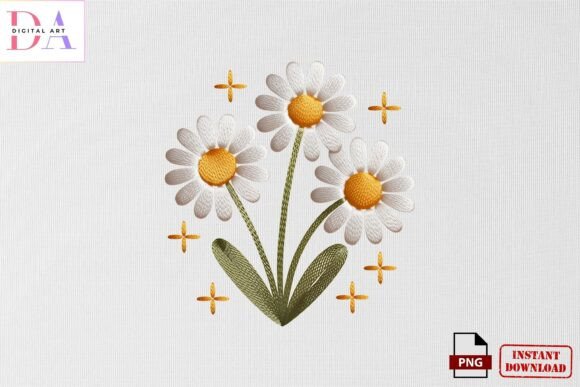
As an embroidery designer who’s stitched thousands of floral motifs—from delicate forget-me-nots to bold sunflowers—the Daisy Flower Embroidery PNG immediately stood out for its balance of simplicity and sophistication. It’s not overly fussy, yet it carries a quiet elegance that reads well both up close and at arm’s length. The three daisy blooms are spaced thoughtfully, each with defined petals, subtle shading, and those golden accents mentioned in the product description—likely intended as highlights or metallic thread suggestions. Visually, it leans into cheerful, spring-inspired energy without veering into cutesy territory. That makes it unusually versatile: equally at home on a linen baby blanket and a minimalist black apron for a boutique café.
Real-World Fit: Where This Design Naturally Shines
I pulled Daisy Flower Embroidery PNG into my workflow before finalizing a customer order for a set of organic cotton kitchen towels—and it worked beautifully as a small-scale corner accent. Its compact composition (no sprawling vines or sprawling stems) means it fits comfortably within common hoop sizes, including 4x4 and 5x7 inches—ideal for quick-turn items like embroidered patches, cap fronts, or pillow covers. I also tested it as a standalone motif on a cream-colored tote bag, and the clean petal outlines held up crisply against the textured canvas. Because it’s delivered as a PNG, it’s inherently scalable for digital use: perfect for printable mockups, Etsy listing visuals, or social media banners showcasing your handmade product line.
Apparel & Wearables: What to Expect
For custom apparel—especially sweatshirts, lightweight tees, and structured caps—the Daisy Flower Embroidery PNG translates well into a machine embroidery design if digitized carefully. The golden accents suggest opportunities for satin stitch highlights or metallic thread runs, but keep in mind: fine details like thin petal edges demand precise digitizing. On stretchy fabric (like jersey), I recommend testing with light cutaway stabilizer and reducing stitch density slightly to avoid puckering. For dark fabric, confirm contrast by previewing thread colors in your embroidery software—cream or pale yellow threads may need an underlay or white fill base to pop cleanly.
Baby & Nursery Items: Softness Meets Structure
This design has real potential for baby blankets, onesies, and nursery wall hangings—but only if digitized with gentle stitch density and minimal underlay. Dense fill stitches can stiffen delicate fabrics; I’d opt for open satin or layered running stitch for petals to preserve drape and comfort. The absence of tiny lettering or micro-details is a plus here—no risk of lost stitches during laundering. That said, always run a test on scrap fabric first, especially when working with bamboo blends or brushed cottons where thread tension behaves differently.
Commercial Use Considerations for Sellers & Makers
If you’re an Etsy seller, craft fair vendor, or small-batch apparel decorator, Daisy Flower Embroidery PNG adds quiet brand consistency across product categories. It’s neutral enough to pair with monograms, seasonal tags (“Spring ’24”), or minimalist typography—making it a strong candidate for cohesive collections. As a digital embroidery file, it supports fast iteration: swap thread palettes for holiday variants (soft sage + ivory for Easter, coral + gold for summer), or layer it with coordinating leaves from your own design library. And because it’s categorized under Crafts and Graphics, it integrates smoothly into broader creative workflows—not just embroidery machines, but Canva layouts, packaging labels, or printed gift tags.
Value Beyond the Stitch
What elevates Daisy Flower Embroidery PNG beyond utility is its giftability and visual trust factor. Customers respond to designs that feel intentional—not generic clip art. The hand-drawn quality and balanced proportions signal care, which reinforces perceived value in your finished product. In product photography, it holds up well in natural light: the golden accents catch attention without glare, and the floral shape creates pleasing negative space around it. That translates directly to higher engagement on Instagram or Pinterest, where scroll-stopping clarity matters more than complexity.
Practical Notes Before You Stitch
Before committing to a production run:
- Test on scrap fabric—especially if using textured, stretchy, or dark materials.
- Review stitch density in your digitized version; high-density fills may require stronger stabilizer on lightweight fabrics.
- Confirm hoop size compatibility—the PNG itself doesn’t define this, so check digitized file specs before purchasing or converting.
- Compare light/dark fabric mockups digitally to anticipate thread color needs and underlay requirements.
- Use appropriate stabilizer: tear-away for stable wovens, cutaway for knits, and water-soluble for caps or delicate surfaces.
- Inspect small details after stitching, particularly petal tips and golden accent areas—they’re easy to miss in bulk runs but critical for polish.
- Verify licensing terms on the Creative Fabrica product page before selling finished embroidered items commercially—especially for resale on platforms like Etsy or Amazon Handmade.
Final Thoughts: A Thoughtful Addition to Your Design Assets
Daisy Flower Embroidery PNG isn’t a “wow-and-done” statement piece—it’s a reliable, quietly expressive design asset. It won’t dominate a garment, but it will elevate it. For embroidery designers building a library of adaptable, seasonally flexible motifs, it fills a smart niche: botanical but not botanical-overload, detailed but not finicky, cheerful but not childish. Whether you’re creating personalized gifts, boutique merchandise, or commercial embroidery products, this design earns its place by delivering consistent results across diverse applications—without demanding excessive digitizing time or compromising on wearability. Just remember: its strength lies in how you apply it. Pair it with thoughtful thread choices, smart stabilization, and intentional placement—and it becomes more than decoration. It becomes part of your handmade story.