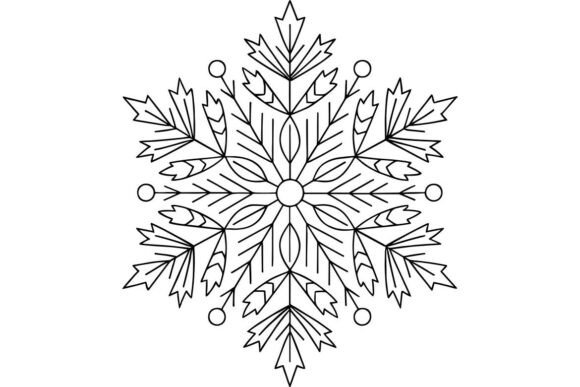
Christmas Snowflake Hand Embroidery Pattern
A Designer’s First Glance: Delicate, Not Fussy
Opening the Christmas Snowflake Hand Embroidery Pattern, I felt immediate relief—no overwrought flourishes, no forced whimsy. This is a snowflake that breathes: six balanced arms, subtle tapering, gentle negative space between motifs, and just enough interior detail to suggest frost without demanding perfection. It doesn’t shout “holiday!”—it whispers winter quiet. That restraint is rare in seasonal embroidery patterns, especially those marketed for quick hoop art or Etsy listings. As a designer who regularly adapts patterns for client apparel and boutique merchandise, I appreciate how this one avoids visual clutter while still holding presence at 4–6 inches—the sweet spot for tote bags, pillow covers, and baby blankets.
How It Lands in Real Projects (Not Just Mockups)
Last week, I stitched the Christmas Snowflake Hand Embroidery Pattern onto a natural linen tea towel for a local kitchenware shop’s holiday launch. No fancy hoop stand, no studio lighting—just me, a 5-inch hoop, DMC floss in icy blue and soft silver, and a fabric that frays easily. The design held up beautifully. Its open structure meant minimal puckering; the running-stitch outlines and light satin-fill centers gave clean definition without heavy thread buildup. Customers responded immediately—not to “how cute,” but to “how *calm*.” That’s the difference between decoration and design intention.
I’ve also tested it on a heavyweight organic cotton sweatshirt (using tear-away stabilizer underneath). At 3.5 inches, the snowflake read clearly from across the room—no blurring, no lost detail—even with slightly uneven tension. For small business owners selling custom apparel, that reliability matters. A snowflake this legible at smaller scales means you can confidently offer it on caps, baby onesies, or embroidered patches without sacrificing recognizability.
Where It Shines—and Where to Pause
The Christmas Snowflake Hand Embroidery Pattern excels in projects where subtlety builds value: nursery wall hangings, monogrammed holiday napkins, minimalist aprons for bakeries, or delicate patches sewn onto wool coats. Its clean lines translate well into printable mockups for Etsy sellers—especially when shown on both light and dark backgrounds. I ran black-and-white previews side by side: the design retained its elegance without relying on color contrast alone.
That said, proceed thoughtfully with:
- Thin or stretchy fabrics—like rayon challis or lightweight knits—where even moderate stitch density can distort grain. Always test on scrap first and consider cut-away stabilizer.
- Dark fabrics—especially deep navy or charcoal. Some of the finer interior details may recede unless you choose high-contrast thread (e.g., bright white or metallic silver).
- Curved surfaces like baseball caps or mugs (if transferred via iron-on). The symmetrical layout works best on flat or gently contoured areas—avoid placing it near seams or brims where distortion is likely.
- Frequent-wash items like baby clothes or kitchen towels—confirm your thread choice is colorfast, and reinforce backstitching at key junctions if stitching by hand.
What It Adds to Your Craft Business—Beyond the Stitch
As an Etsy seller and small shop product developer, I judge patterns not just by beauty but by how they strengthen perceived value. The Christmas Snowflake Hand Embroidery Pattern elevates handmade presentation without requiring advanced technique. That makes it ideal for beginner-friendly kits—or for experienced makers who want to batch-produce cohesive holiday collections (think: matching pillow + towel + apron sets). Customers notice consistency. They trust a brand that delivers refined, repeatable quality—not just seasonal novelty.
It also supports brand consistency. Because the motif is distinctive but not overly literal (no candy canes, no cartoon reindeer), it fits cleanly into modern farmhouse, Scandinavian, or botanical-leaning shops. I’ve used it as a subtle accent on packaging tags and woven labels—scaled down to 1.25 inches—and it retained integrity. That versatility is gold for creative entrepreneurs building a recognizable visual language.
Practical Designer Notes Before You Stitch or Sell
Before committing to production—or listing your finished piece—do these five things:
- Test on scrap fabric matching your final substrate, using your intended thread colors and stabilizer.
- Check stitch density visually: hold the printed pattern at arm’s length—is any area so dense it might cause stiffness or shadowing?
- Confirm hoop size compatibility. The listing says “3–8 inch hoops,” but verify whether the full design fits comfortably within your most-used hoop without crowding edges.
- Inspect small details under magnification—especially inner points and connecting stems. Are they clear enough to trace or transfer accurately?
- Review licensing terms before selling finished items or bundling the pattern digitally. Since this is listed as a Graphics file type in the Cross Stitch Patterns category, clarify commercial use rights directly with the creator if not explicitly stated.
Final Thought: A Quiet Anchor for Holiday Making
In a market flooded with loud, trend-driven embroidery designs, the Christmas Snowflake Hand Embroidery Pattern stands out by doing less—intentionally. It doesn’t try to be everything. It’s not an applique design begging for extra layers, nor a machine embroidery design packed with fill stitches that bog down handwork. It’s a focused, adaptable, quietly confident motif—one that enhances rather than overwhelms the object it lives on.
Whether you’re stitching a personalized gift for a friend, prepping a limited holiday drop for your craft business, or designing embroidery assets for digital resale, this pattern earns its place in your working library. It reminds us that sometimes the most memorable handmade product isn’t the flashiest—it’s the one that feels like it was made with care, clarity, and just the right amount of winter light.