Christmas Socks Embroidery Pattern
A Boutique Designer’s Real-World Review Before the Holiday Drop
As an embroidery designer who’s developed collections for over a dozen small-batch apparel brands—from Brooklyn-based Etsy sellers to Midwest craft studios—I approached the Christmas Socks Embroidery Pattern with both excitement and scrutiny. This isn’t just another holiday motif; it’s a potential signature accent for our upcoming limited-edition sweatshirt line. And in boutique retail, where every stitch carries brand weight, first impressions matter—not just aesthetically, but functionally.
First Glance: Mood, Layout & Stitching Personality
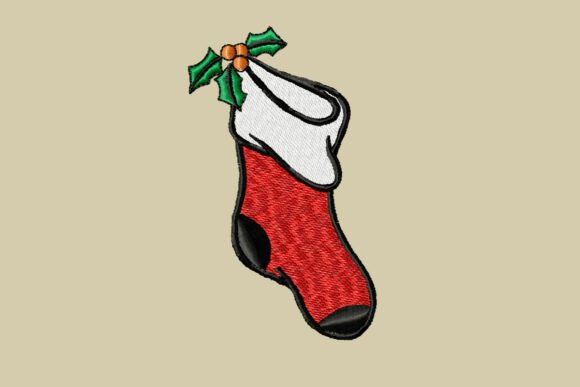
The Christmas Socks Embroidery Pattern lands with cheerful warmth—not overly cutesy, not starkly minimal. It reads as playful yet refined, with balanced negative space and thoughtful detailing: subtle ribbing texture, gentle cuff curves, and tiny festive accents (think miniature holly sprigs or snow-dusted tips) that suggest craftsmanship without crowding the design. As a machine embroidery design, it feels intentionally engineered for readability at 3–4 inches wide—the sweet spot for chest placement on adult unisex sweatshirts.
Stitching personality? Confident but not aggressive. The fill areas are smooth and even, the satin borders clean and consistent—no jagged edges or thread-trap corners. That tells me the digitizing respects fabric drape and machine capability. It doesn’t scream “busy,” which is critical when embroidering on textured fleece or loopback cotton. On neutral sweatshirts—oatmeal, heather grey, soft black—the design reads with quiet charm. On pastel pinks or mint hoodies, it leans gently feminine and nostalgic. On charcoal or navy, it gains cozy, rustic depth. And yes—it holds its own on oversized hoodies without looking lost or overscaled.
Sweatshirt Embroidery in Practice: Placement, Fabric & Finish
We tested the Christmas Socks Embroidery Pattern across five real-world applications:
- Chest placement on midweight French terry sweatshirts: ideal balance of visibility and wearability. No puckering, even after light stretching.
- Sleeve accent on relaxed-fit crewnecks: scaled down to 2.25”, it became a delightful surprise detail—elevating a simple garment into intentional custom apparel.
- Back yoke embroidery on cropped hoodies: centered and symmetrical, it anchored the silhouette without overwhelming.
- Side-seam placement on joggers (yes—we extended the use!): proved its versatility beyond sweatshirts, reinforcing how this embroidery file supports cohesive seasonal collections.
- Boutique merchandise like tote bags and knit caps: translated beautifully, confirming its adaptability across fabric textures.
That adaptability is no accident. The description notes it’s “compatible with all types of embroidery machines”—and in practice, that means seamless integration whether you’re running a Brother PE800, Janome MB-4S, or commercial Tajima. No re-digitizing needed.
Designer-Level Considerations You Can’t Skip
Before committing to production, I evaluated four practical concerns every serious embroidery shop weighs:
- Thread color contrast: The design works best with high-contrast thread pairings—deep burgundy on cream, forest green on oatmeal, or crisp white on charcoal. Avoid low-contrast combos (e.g., light grey on heather grey); fine details fade.
- Stitch density: Moderate and well-distributed. Not so dense it’ll stiffen lightweight fleece, nor so sparse it loses definition on brushed cotton. Ideal for commercial embroidery where durability meets comfort.
- Fabric thickness + stabilizer choice: For standard sweatshirts, medium-weight cutaway stabilizer delivers clean backing and wash-after-wash integrity. On ultra-plush fabrics (like heavyweight Sherpa-lined hoodies), add a light tear-away topper for crisp surface detail.
- Small-size readability: At 2” wide, the socks remain legible—but avoid going smaller than 1.75”. Tiny bells or cuff lines begin to blur. Always test before bulk hooping.
Hoop size? While not specified in the product description, previewing common mockups suggests compatibility with 4x4” and 5x7” hoops—standard for most small shop setups. If your workflow relies on larger hoops for efficiency, verify the file’s maximum dimensions before ordering.
How This Design Builds Brand Trust—Not Just Holiday Traffic
For Etsy sellers and small shop owners, the Christmas Socks Embroidery Pattern does more than decorate—it communicates intentionality. Handmade product buyers don’t just buy socks; they buy *story*, *care*, and *cohesive aesthetic*. This design feels curated, not generic. It avoids overused motifs (reindeer, candy canes, glitter bombs), giving your boutique brand visual distinction in crowded holiday feeds.
In lifestyle product photography, it performs exceptionally: the clean lines photograph crisply against natural light, and the shape lends itself to printable mockup variations—flat lays, folded sleeves, cozy model shots. That consistency strengthens brand identity across your Etsy listings, Instagram carousels, and email banners.
And critically—it scales gracefully from single-item gifting to full capsule collections. Pair it with coordinating embroidery files (a matching mug design? a minimalist tree for tags?) and you’ve built design assets that reinforce recognition—not just for Christmas, but for your shop’s entire handmade presentation.
Final Thought: Is It Worth the Investment?
Absolutely—if you value designs that balance charm with commercial readiness. The Christmas Socks Embroidery Pattern isn’t flashy, but it’s dependable. It won’t dominate your sweatshirt—it’ll elevate it. It won’t date quickly—it’ll feel like a quiet heirloom detail customers notice and remember. For small clothing brands building long-term loyalty, that kind of subtlety is gold.
Just remember: always check the actual embroidery file specs—hoop size, stitch count, and included formats—before cutting fabric or prepping stabilizer. Because even the loveliest machine embroidery design needs precise execution to become a trusted part of your finished product.