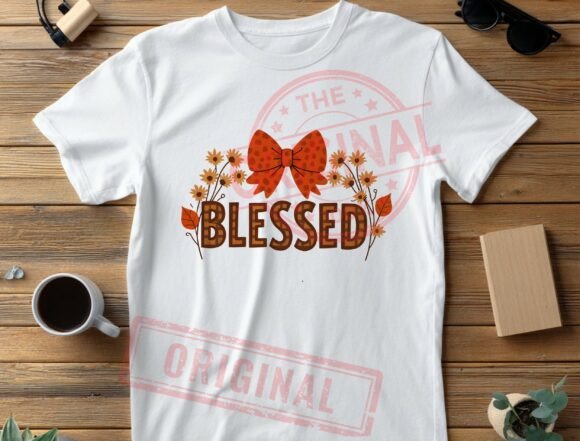
Blessed Coquette PNG, Faux Embroidery
First Impression: Chic, Cozy, and Confidently Seasonal
As an embroidery designer who’s set up at over 40 craft fairs—from snowy holiday markets to sun-drenched spring bazaars—I know instantly when a design carries booth-ready energy. Blessed Coquette PNG, Faux Embroidery lands with soft confidence: it’s not loud, but it’s undeniably noticed. The title cues a blend of gratitude (“Blessed”), feminine flair (“Coquette”), and intentional trend-awareness (“Faux Embroidery”). Paired with “Leopard Bow” and “Thankful,” it leans into fall’s duality—warmth and whimsy, reverence and playfulness. This isn’t farmhouse rustic or minimalist monochrome. It’s elevated cozy: think velvet bows, brushed gold thread accents, and the kind of charm that makes shoppers pause mid-aisle to touch a tote bag.
Where It Shines: Craft Fair Product Placement
In my booth, Blessed Coquette PNG, Faux Embroidery performs strongest on products where texture, scale, and intentionality intersect. On a heavyweight canvas tote bag? Perfect—it anchors the front panel without overwhelming. On a linen apron? Yes, especially near the pocket or chest curve, where the bow motif echoes natural body lines. For tea towel embroidery, I’d place it low on the hem—just above the border—so the “Thankful” sentiment reads clearly against kitchen steam and sunlight. As an embroidered patch? Highly effective for layering on denim jackets or market bags; its faux-embroidery aesthetic translates beautifully to stitched-on versatility.
It’s less ideal for curved cap fronts unless resized thoughtfully—the bow and lettering need breathing room. And while it’s charming on pillow covers, avoid placing it dead-center on dense, nubby fabrics like bouclé or thick corduroy; fine details (like delicate bow loops or thin serif strokes) can blur. For small pouches or zipper pulls? Scale down only if your digitizing allows clean simplification—otherwise, stick to items where it lives at 3–5 inches wide.
Photography & Online Appeal: A Digital Seller’s Secret Weapon
This design is made for Etsy sellers and digital crafters. Its “faux embroidery” style—soft shadows, subtle stitch texture implied in the PNG—creates instant visual cohesion in printable mockups. Pair it with warm-toned backgrounds (oat milk latte, dried wheat, knitted throws), and it reads as premium handmade—not clipart. Customers scrolling mobile feeds register the leopard bow + “Blessed” combo in under two seconds. That emotional shorthand—gratitude meets glam—converts faster than generic “Fall Y’all” text.
For T-Shirt Designs and Graphics buyers, Blessed Coquette PNG, Faux Embroidery stands out because it bridges categories: it’s wearable art, seasonal decor, and heartfelt messaging all at once. Unlike busy Thanksgiving motifs, it avoids cliché. Unlike stark minimalism, it offers personality. That balance is gold for small shop product listings aiming for both search visibility and scroll-stopping warmth.
Production Realities: What Your Hoop—and Customers—Will Actually Experience
Here’s what I check before cutting fabric: First, stitch density. Even though it’s a PNG, if you’re converting to a machine embroidery design, inspect tight areas—especially where the bow ties or inner lettering curves. Overcrowded fills risk puckering on lightweight cotton or textured tea towels. Second, thread colors: the leopard print suggests contrast—think cream thread on charcoal, or burnt sienna on oatmeal linen. Always test on scrap with your intended stabilizer; medium-weight cutaway works best for structured items like caps or pouches, while tear-away suffices for smooth totes.
Small lettering—especially “Thankful”—needs verification at 2.5 inches tall. If letters dip below 1/8 inch in height, legibility suffers on dark fabric or from 3 feet away (the average craft fair viewing distance). Also: confirm hoop size compatibility early. Some versions may require a 5x7 or larger frame—critical if you run compact embroidery machines common among home-based Etsy sellers.
Booth Impact & Buyer Engagement: Beyond the Stitch
At a crowded fair, Blessed Coquette PNG, Faux Embroidery elevates perceived value—not just through execution, but through mood alignment. Shoppers drawn to “cozy season” energy linger longer near displays featuring this design. They photograph it. They tag friends. They buy multiples—not just for themselves, but as small-shop gifts (“This feels like *her* vibe”). That emotional resonance directly supports brand consistency across your line: whether it’s on a tea towel, a patch, or a limited-run embroidered market bag, it signals care, curation, and seasonal authenticity.
It also strengthens booth display strength. Group three items—a bow-accented apron, a “Thankful” tea towel folded beside cinnamon sticks, and a matching pouch with the leopard motif peeking from the zipper pull—and you’ve built a micro-collection. That tells customers, “You don’t need one thing—you need the *feeling*.” That’s repeatable, scalable storytelling for creative entrepreneurs.
Critical Designer Notes Before You Press Start
- Always test the design on scrap fabric—match fiber content, weight, and dye lot to your final product.
- Check thread contrast on both light and dark substrates; avoid blending threads that vanish on black linen or heather gray.
- Review spacing between elements—especially bow loops and letter kerning—to prevent stitching collisions.
- Confirm hoop size and file format compatibility with your embroidery software before batch digitizing.
- Inspect stitch density manually—don’t rely solely on auto-digitized fills for delicate areas.
- Use the right stabilizer: cutaway for stretchy or unstable fabrics; tear-away for stable wovens.
- Create at least one real mockup—not just digital—and hold it under fair-like lighting (natural + warm bulb).
- Compare fabric colors side-by-side: screen color ≠ dye lot. Order physical swatches.
- Confirm commercial licensing before selling finished products—this is non-negotiable for Etsy sellers and wholesale boutique makers.
Bottom line? Blessed Coquette PNG, Faux Embroidery isn’t just another fall graphic. It’s a quiet confidence-builder for your craft fair table, a versatile anchor for your handmade product line, and a thoughtful bridge between seasonal sentiment and modern maker aesthetics. When executed with attention to fabric, thread, and human connection—it doesn’t just sell. It starts conversations.