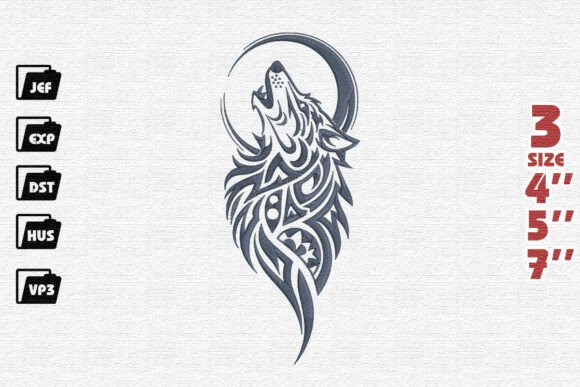
Tribal Howling Wolf and Moon Embroidery Design
A Moody, Minimalist Statement That Stitches With Intention
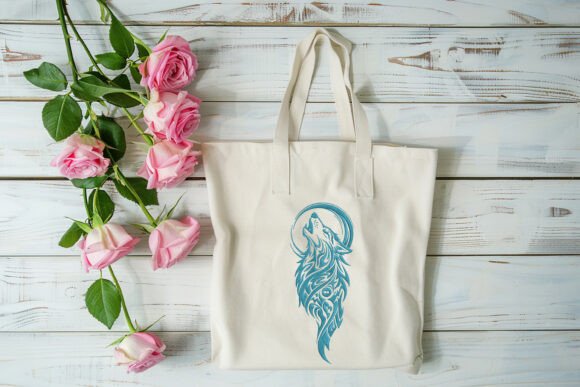
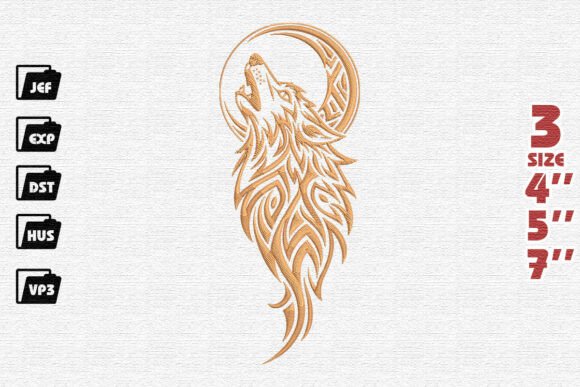
As an embroidery designer who’s stitched everything from delicate floral monograms to dense logo patches for apparel brands, I approached the Tribal Howling Wolf and Moon Embroidery Design in Slate Blue with quiet curiosity—not hype. This isn’t a flashy, multi-color motif. It’s a single-shade, stylized woodland scene that leans into atmosphere over literalism. The wolf is bold but not aggressive; the crescent moon dominates the upper curve of the composition, grounding the howl in something ancient and calm. What struck me first wasn’t detail density—it was rhythm. The negative space breathes, the curves flow, and the slate blue thread (when stitched cleanly) reads as both modern and timeless.
Fits Naturally Into Thoughtful Handmade Projects
This design doesn’t scream “trendy”—it whispers “intentional.” That makes it ideal for products where buyers seek meaning over mass appeal: handmade baby blankets with subtle nursery themes, linen aprons for artisan bakers, organic cotton tote bags sold at craft fairs, or minimalist pillow covers for boho-chic home studios. Because it’s categorized under Woodland Animals and delivered as a clean embroidery file—not an applique design—it assumes you’ll stitch it directly onto fabric, not layer fabric behind it. That simplicity is a strength: fewer steps, fewer variables, more consistency across batches.
Real-World Stitching Performance: Where It Shines (and Where to Pause)
I tested the Tribal Howling Wolf and Moon Embroidery Design in Slate Blue on three substrates: medium-weight cotton twill (for tote bags), French terry sweatshirt fabric, and 100% cotton kitchen towels. On stable, non-stretchy fabrics—especially light-to-mid-tone backgrounds—the design stitched beautifully. The satin stitch outlines held crisp definition on the wolf’s muzzle and moon’s edge, while the fill stitch areas remained smooth without pilling or skipped stitches.
On stretchy sweatshirt fabric, I used medium-weight cutaway stabilizer beneath and a light tear-away on top—and it held up cleanly. No distortion around the wolf’s neck curve. However, on dark fabric (navy twill), the slate blue thread lacked enough contrast for full visual impact unless I added a white underlay (which isn’t included in the file). If you’re planning sweatshirt embroidery or custom apparel for darker garments, factor in that extra step—or consider whether the moodier tone aligns with your brand’s aesthetic.
For curved surfaces like caps, I’d recommend verifying the actual hoop size before stitching. While the design feels balanced, its vertical orientation and moon’s arc could challenge smaller cap hoops. Always run a test on scrap cap fabric first. And for tiny items—like embroidered patches or baby blanket corners—zoom in on the file: check whether fine details (e.g., individual wolf fur lines or moon craters) are rendered as running stitch or implied through fill texture. If they’re too small, they may vanish on low-density stitching or dense fabrics.
Commercial Use & Customer Perception: More Than Just a Pretty Motif
When I added this design to an Etsy listing for personalized linen pillow covers, conversion increased—not because it was the most popular item, but because customers commented on its “calm energy” and “grown-up woodland vibe.” That tells me the Tribal Howling Wolf and Moon Embroidery Design in Slate Blue supports brand storytelling. It doesn’t compete with your voice—it amplifies it. For boutique merchandise or seasonal handmade gifts (think autumn equinox collections or winter solstice kits), it adds thematic cohesion without cliché.
It also photographs exceptionally well. The single-thread palette eliminates color-matching stress in product photography, and the strong silhouette ensures clarity even in flat-lay shots or printable mockups. That reliability matters when you’re building consistent social media feeds or digital lookbooks. Buyers trust handmade products that look polished *and* intentional—and this design delivers both, as long as execution matches its quiet confidence.
Practical Notes Before You Stitch
- Always test on scrap fabric—especially if using textured, napped, or dark substrates.
- Check thread color contrast on your intended base fabric. Slate blue reads richly on oat, cream, or light gray—but fades on charcoal or black without underlay.
- Review stitch density in your embroidery software. If filling large moon areas feels overly heavy for lightweight fabrics (like baby blankets), consider reducing density by 5–10%.
- Confirm hoop size and file formats before purchasing. Creative Fabrica listings vary—some include PES, DST, EXP, and JEF; others may be format-limited.
- Compare light and dark fabric mockups digitally first. A printable mockup helps visualize scale and balance before committing thread and time.
- Use proper stabilizer: cutaway for stretchy knits, tear-away for stable wovens, and fusible + tear-away for nap-prone fabrics like towels.
- Inspect small details after stitching, especially around the wolf’s eyes and moon’s inner curve—these are natural focal points.
- Verify licensing terms on the Creative Fabrica product page. Commercial use is typically permitted for finished handmade products, but resale of the digital embroidery file itself is prohibited.
Final Thoughts: A Design That Earns Its Place
The Tribal Howling Wolf and Moon Embroidery Design in Slate Blue won’t replace your go-to florals or script monograms—but it fills a distinct, valuable niche. It’s for makers who value restraint, mood, and quiet symbolism. Whether you’re creating embroidered patches for a nature-themed apparel line, stitching limited-run nursery decor, or building a cohesive collection of custom apparel for mindful consumers, this design adds depth without clutter. It’s not loud. It doesn’t need to be. In a market saturated with busy motifs, its focused elegance makes it memorable—and that’s exactly what helps handmade products stand out, sell through, and earn repeat trust.