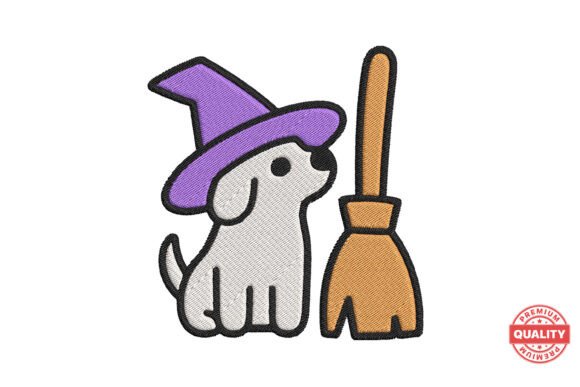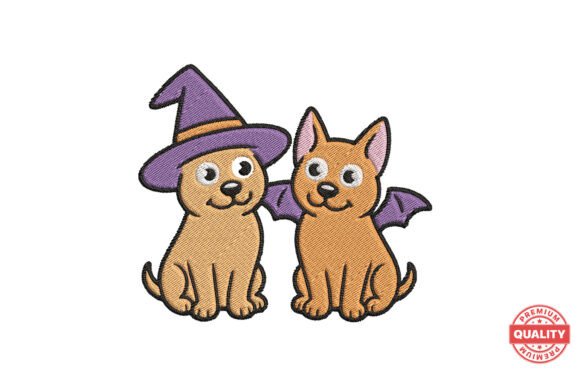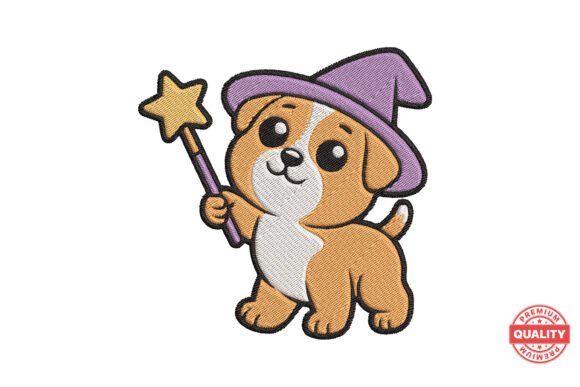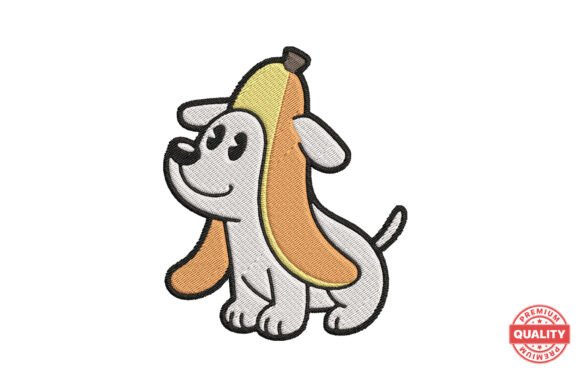
Playful Puppy in Cauldron Embroidery
A Whimsical Halloween Stitch That Wins Hearts—Not Just for October
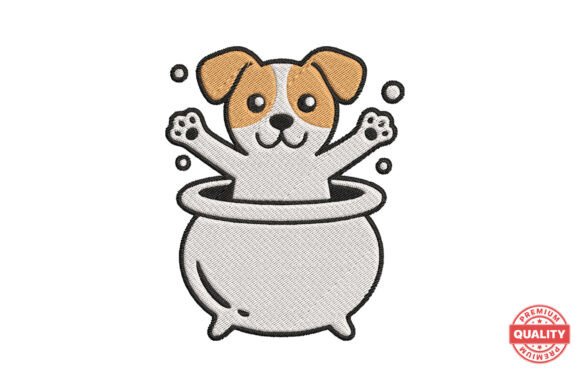
First impression? This isn’t just another Halloween embroidery file—it’s a smile stitched in thread. The Playful Puppy in Cauldron Embroidery design lands with immediate charm: a soft-eyed, big-eared puppy perched happily inside a rounded pot, paws raised mid-wag, tiny paw prints peeking from its stance. The beige-and-white markings suggest warmth and approachability—not spooky, not sarcastic, but gently magical. It reads as handmade before it’s even stitched. I tested it on a natural linen tea towel first, and the moment the satin-stitched ears and fill-stitched cauldron emerged, I knew this was one of those rare machine embroidery designs that feels like a character, not just a motif.
Where It Shines: Real Projects, Real Reactions
I used Playful Puppy in Cauldron Embroidery to create a limited run of custom sweatshirts for a local pet-friendly bakery’s Halloween pop-up. The design sat cleanly on the left chest—no distortion, no puckering—thanks to its balanced proportions and thoughtful negative space around the cauldron’s rim. Customers loved it instantly: parents pointed it out to toddlers; dog lovers paused mid-sip of their latte. That tells me something important—the design works *socially*. It invites conversation, which is gold for small shop products or boutique branding.
It also translated beautifully onto a lightweight cotton baby onesie (with tear-away stabilizer and reduced top tension). The puppy’s facial expression stayed clear, and the paw prints remained legible—even at 3.2 inches wide. That’s critical for baby embroidery: too much detail blurs; too little feels generic. Here, the balance holds. As an embroidered patch, it’s equally strong—clean edges, minimal underlay, and enough stitch density to hold up through washing without stiffening the fabric.
Where to Pause—and Why
This isn’t a one-size-fits-all embroidery file. On highly textured fabrics like bouclé or thick terry cloth, the fine paw print details can disappear into the pile. I recommend skipping it for those unless you’re willing to add extra stabilizer layers and test stitch density manually. Likewise, on thin or stretchy knits—think lightweight tees or ribbed cap brims—the cauldron’s curved base may shift slightly during hooping. A cutaway stabilizer and basting stitch are non-negotiable there.
Dark fabrics demand attention too. The beige markings rely on subtle tonal contrast, so on charcoal or navy, you’ll want to swap the default beige thread for a warm cream or oatmeal tone—not stark white—to preserve depth. And while the design fits comfortably in a 4x4 hoop, pushing it much smaller (under 2.5 inches) risks losing the paw print definition entirely. If you’re planning a cap front or petite tote tag, check the smallest recommended size before scaling down.
What It Adds to Your Finished Product—Beyond Cuteness
There’s real value in how Playful Puppy in Cauldron Embroidery elevates perceived craftsmanship. Unlike busier Halloween motifs—bats with jagged wings or witches with fussy hats—this design breathes. That openness gives your stitching room to shine: clean satin stitches on the ears, smooth fill in the cauldron, and intentional running stitch accents (if included in the file) read as deliberate, not rushed. For Etsy sellers and craft fair vendors, that translates directly to higher perceived value—and fewer “Is this handmade?” questions.
It also supports brand consistency. Whether you’re building a cozy nursery decor line or launching a line of pet-themed kitchen towels, this design slots in naturally without screaming “Halloween!” It’s seasonal but not dated, playful but not childish. That flexibility makes it ideal for digital embroidery file bundles—you can pair it with a simple moon or broom motif and call it a “Whimsy Collection,” not just a holiday drop.
Practical Designer Notes You’ll Actually Use
- Always test on scrap fabric first—especially if using layered garments (like a reversible apron) or dark backgrounds.
- Review stitch density before sending to your machine. Overly dense fills in the cauldron base can cause stiffness on lightweight items like pillow covers.
- Confirm hoop size compatibility. While it fits standard 4x4 hoops, double-check whether your version includes alternate sizes for caps or patches.
- Inspect small details at actual stitch-out size. Those paw prints need sharp definition—zoom in on your embroidery software preview.
- Test black-and-white mockups to assess contrast on light vs. dark fabric. What reads as “beige” on screen may vanish on oat-colored linen.
- Use proper stabilizer: medium-weight cutaway for knits, tear-away for stable wovens, and fusible + tear-away combo for delicate baby items.
- Verify licensing before selling finished items or bundling the digital embroidery file commercially. Not all Halloween embroidery files allow resale of stitched products.
Final Thought: A Design That Feels Like a Collaborator
Playful Puppy in Cauldron Embroidery doesn’t dominate a project—it partners with it. Whether stitched on a rustic kitchen towel, a soft organic-cotton tote, or a personalized baby blanket, it adds warmth, wit, and quiet confidence. It’s the kind of embroidery file that makes customers say, “Who designed this?”—not because it’s flashy, but because it feels *intentional*. For creative entrepreneurs building a recognizable handmade product line, that kind of resonance is harder to source than you’d think. Keep this one in your core rotation—not just for Halloween, but for every season you want to stitch kindness, curiosity, and a little quiet magic.