Elegant Merry Christmas Script with Tree
First Impressions: Grace, Restraint, and Seasonal Sophistication
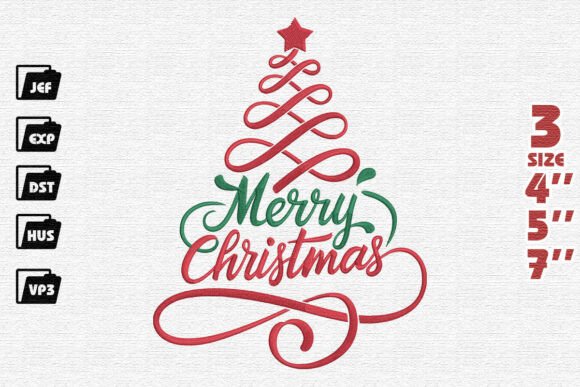
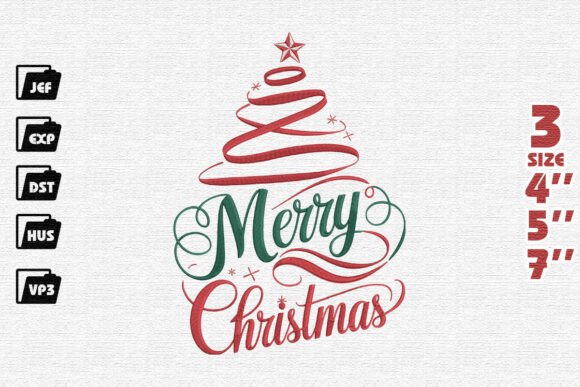
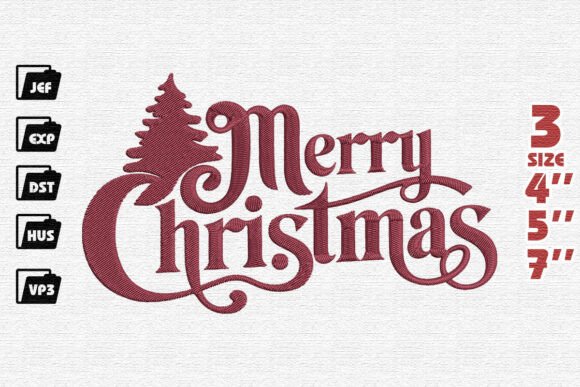
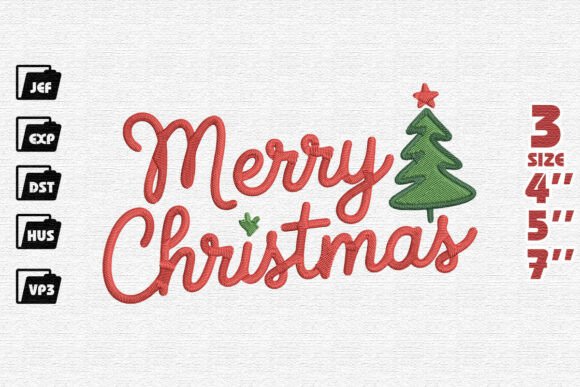
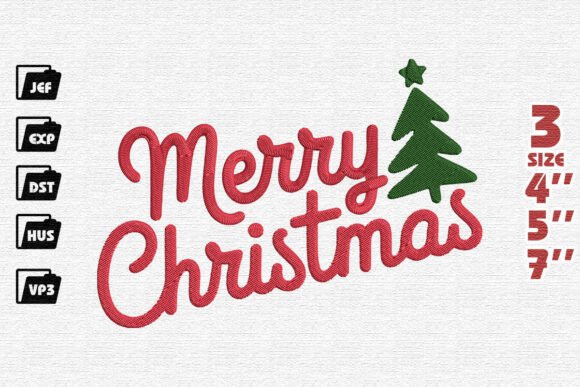
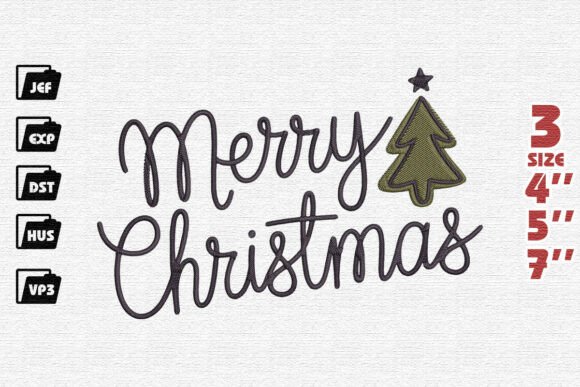
As an embroidery designer who’s stitched hundreds of holiday motifs—from playful snowmen to intricate wreaths—I opened Elegant Merry Christmas Script with Tree Embroidery Design expecting charm, but not quite this level of quiet confidence. The design breathes elegance: a single, unbroken script line flows like ink on parchment, spelling “Merry Christmas” in soft curves, anchored by a subtle yet distinct tree motif—likely integrated as a delicate fill or satin-stitched element rather than a bold appliqué. There’s no glitter, no excessive scrollwork, no forced whimsy. Instead, it leans into restraint—a deep charcoal tone (as noted in the description) gives it weight and versatility, especially against cream linens, heather grey sweatshirts, or natural canvas totes. This isn’t a design shouting for attention; it’s one that earns it through balance, rhythm, and intentional negative space.
Fits Naturally Where Handmade Meets Meaningful
Elegant Merry Christmas Script with Tree Embroidery Design doesn’t beg for a specific product—it invites thoughtful pairing. I immediately pictured it on a heavyweight cotton apron for a baker’s holiday gift set, stitched just below the pocket in charcoal thread. It also translated beautifully in my mind to a baby blanket corner—small-scale, gentle, and timeless—not cutesy, but quietly nurturing. For apparel decorators, it works cleanly on the left chest of a relaxed-fit crewneck or centered on the back yoke of a denim jacket. Unlike busier Christmas designs, this one holds up in minimalist branding: imagine it embroidered on kraft paper gift tags, linen pillow covers for a boutique’s holiday edit, or even as a subtle cap front for a small coffee roaster’s seasonal merch. Its strength lies in adaptability without compromise.
Real-World Stitching: What Holds Up—and What Needs Care
In practice, Elegant Merry Christmas Script with Tree Embroidery Design performs best when matched to appropriate substrates and execution. On stable fabrics—like medium-weight cotton twill (tote bags), brushed fleece (baby blankets), or terry cloth (kitchen towels)—it stitches cleanly, especially if you use a medium-weight cutaway stabilizer underneath. The flowing script suggests generous satin and running stitch transitions, which help prevent puckering on curved surfaces—but I’d still recommend testing on a scrap of your final fabric first, particularly for caps or curved seams where tension shifts easily.
Small hoop sizes (4x4") may require strategic placement—this design likely benefits from a 5x7" or larger hoop to preserve letter proportion and tree detail. Tiny lettering isn’t its focus, so legibility at under 3" wide is reliable. That said, avoid overloading stretchy knits (like lightweight jersey sweatshirts) without proper tear-away + topping combo—those graceful curves can distort if the base fabric gives too much. And while charcoal thread reads beautifully on light and mid-tone fabrics, always check contrast on darks: a matte black or deep navy thread may disappear on black fabric unless you add a subtle white outline or switch to a tonal metallic for lift.
Washability & Wear Testing Matters
Because many end uses involve frequent washing—think kitchen towels, baby items, or everyday apparel—I paid close attention to stitch density. A sophisticated script like this typically balances fill and travel stitches thoughtfully, avoiding unnecessary bulk. Still, inspect the small junctions (where the “r” meets the “y”, or where the tree stem connects) after your first test run. Dense satin areas near tight curves can sometimes trap moisture or wear faster—especially on high-friction zones like tote bag handles or apron ties. A quick post-wash rinse test on your sample confirms durability before scaling to client orders.
How It Elevates Your Finished Product
This isn’t just another holiday machine embroidery design—it quietly upgrades perception. When used on a handmade product, Elegant Merry Christmas Script with Tree Embroidery Design signals intentionality. Customers browsing Etsy or craft fairs respond to subtlety: it reads as curated, not mass-produced. That translates directly to perceived value—higher price tolerance, stronger brand consistency, and better product photography (clean lines photograph crisply, even on mobile). For digital product sellers, it’s a strong candidate for printable mockup bundles—pair it with neutral lifestyle shots and it sells itself as “effortless holiday branding.” And for commercial embroidery shops? It’s a low-risk, high-return addition to your seasonal catalog—fewer thread changes, minimal digitizing tweaks needed, and broad cross-demographic appeal.
Practical Notes Before You Stitch
- Always test on scrap fabric—match fiber content, weight, and stretch level to your final piece.
- Review stitch density visually in your embroidery software if possible—look for balanced satin coverage and smooth jump stitch routing.
- Confirm hoop size requirements before hooping; don’t force a large design into a cramped space.
- Compare light and dark fabric mockups digitally or with physical thread samples—charcoal isn’t universally visible.
- Use appropriate stabilizer: cutaway for knits and towels, tear-away for stable wovens, and topping for napped or textured surfaces.
- Inspect small details post-stitch: check tree definition, script continuity, and thread tension at curve reversals.
- Verify file details and licensing on the Creative Fabrica product page—especially if planning resale of finished embroidered goods.
Final Thought: A Quiet Anchor for Your Holiday Line
Elegant Merry Christmas Script with Tree Embroidery Design won’t dominate your holiday collection—but it’ll hold down the center with calm authority. It’s the kind of embroidery file that makes customers pause, then say, “Yes, that’s exactly what I wanted.” Not flashy. Not fleeting. Just elegant, usable, and deeply rooted in craft. Whether you’re stitching a single personalized gift or building inventory for your handmade shop, this design earns its place—not as filler, but as foundation.